
Facts about South Africa's water supply
South Africa's long term water supply leaves a grim picture
Despite South Africa 2500+ registered water-supply dams and expansive infrastructure investment, the country’s financially viable freshwater resources are almost depleted.
Further, of the 223 river ecosystems in South Africa, 60% are threatened, of which 25% are critically endangered.
Currently, the agriculture sector accounts for 60% of the country’s water use, whereas municipal and domestic sectors use 27%. However, municipalities in South Africa have registered water losses of up to 37%. Moreover, where no records are kept by municipalities, this loss is estimated to be 50%.
Water supply problems in South Africa are getting worse - 2022
In 2014 we published a a artcicle on our webite about water shedding in the future and possble contributing factors. read it below and you will se it has become worse and the contributing factors has not changes
“Is "water shedding" the next load shedding ? - published in 2013 " .
Read more: Water supply problems in South Africa are getting worse - 2022
Tests conducted to check if rainwater is safe to drink
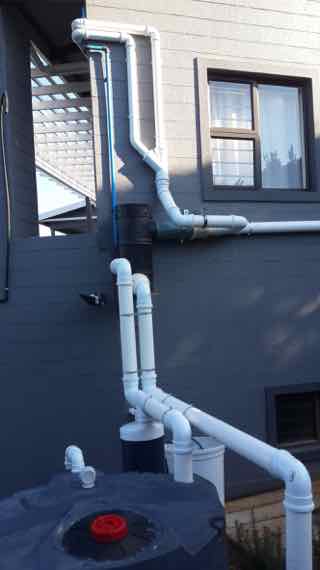
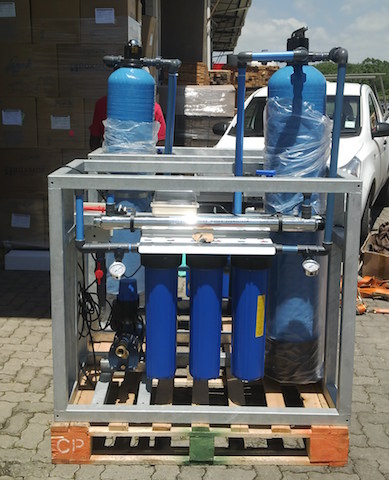
After installation completion, the installed rainwater harvesting system is flushed and cleaned out. An immediate water sample is tested using an onsite testing kit. A quick 2 day microbiological test is also conducted to see if there are any “bugs” in the water.
Before approving the system for potable use, a detailed water sample (1 litre) is taken and sent off to an accredited water testing laboratory. This laboratory makes use of the World Health Organization (WHO) Quality Control (QC)standard for potable water to highlight the sample's water quality, as opposed to the SANS or any alternative standard. The results received are helpful and explicit in showing up any water quality related problems linked to both potable and household uses.
Every system is unique and therefore every the water treatment performance of each rainwater harvesting installation must be analyzed accordingly.
If the results are positive the installation is cleared for potable use.
Durban commercial water costs increased by 378 percent in 10 years
In 2013 businesses paid R11.23/Kl, in 2023 Durban businesses will pay R53.70/Kl - that is a 378% increase in 10 years.
It is clear that the Metro is focussing on generating more income from their industrial user base who in many instances are the biggest consumers of water. These massive increases in water prices will start focussing business' attention to water conservationa and the re-use of treated water.
Rainwater harvesting installations are a quick win to reduce water costs in a business.
Water and energy demand unbalance in Africa
Worldwide weather patterns have changed significantly and frequent weather anomalaties are having a greater impact on humans than before. It can be argued that it is part of a broader long term weather cycle and that technology and television has just made it a lot more visible to people around the world. The fact is that humans are consumers and they consume more and more resources on an ongoing basis.
Fresh water sources are becoming more polluted with industry, sewerage and irrigation systems being the big culprits. Water and energy demand need to be balanced on an ongoing basis. In a developing continent like Africa the demand for enegry far outstrips the demand for water conservation. In some countries in Africa only 2-5 percent of the population have acces to electricity. Thus the political demand for electricity as a resource is tremendous. Water intensive power generating facilities are built without considering the imbalance that these units will have on the natural water cycle. The primary focus is on coal, gas and oil, and water is pumped over great distances to satisfy the demand for these water hungry facilities. In a country like South Africa, 2% of all the available fresh water is used for generating electricity.
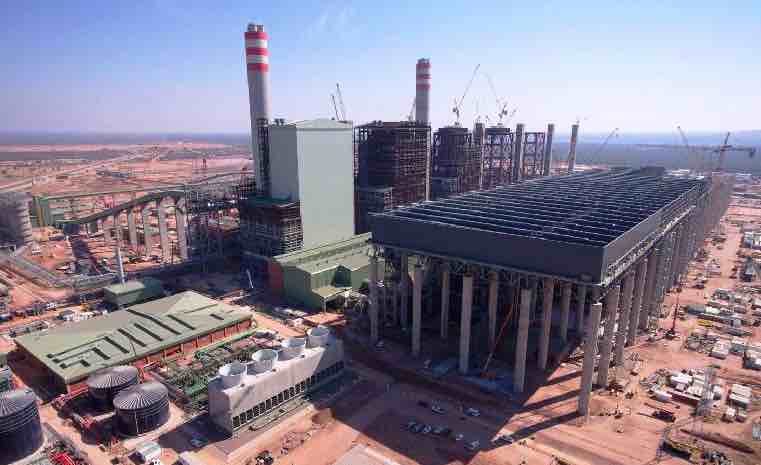
Assumption of natural normal precipitation forecasts that were made ten years ago are no longer valid. Mega power stations like Medupi being built in South Africa technically does not have enough water to supply the station when generating at peak capacity. Water thus have to be piped and pumped over long distances from rivers in other areas to support the demand for these generating units. This in turn will create an imbalance in another catchment system.
More and more energy is thus being being used to move water around the continent, creating a complete imbalance in the water energy cycle. Centralised water distribution networks and systems are becoming bigger and bigger and more cumbersome to manage. Approxiamtely 30% of all water supplied to a centralised distribution network is lost to leaks, thus it can be argued that 30% of the energy required to pump water through these systems are going to waste.
Some countries in Southern Africa use more than 40% of natural precipitation to satisfy water demand in their countries. Any major shift in the rainfall patterns can have a catastrophic economical impact. Centralised water supply networks has always been seen a a cheap source of treated water but this cannot be maintained much longer and water costs to big industrial consumers have increased significantly over the last 4 years.
The imbalance in water supply due to energy demand will continue to drive up the price of water within these centralised water supply networks - thus forcing companies and households to reduce consumption and look at alternative sources of water. Every drop of water need to be conserved and managed within the energy cycle.
Water and enegry planning cannot be seperated or seen as seperate issues. These two resources are interlinked and for now the focus should be to restore the current imbalance that has been created.
This can be partly achived by:
- Limiting deforrestation and preserving natural water watershed and catchment areas.
- Capture as much water a possible from natural precipitation. Coastal areas with high rainfall should develop and implement effective rainwater harvesting strategies as rainwater in these areas run into the sea very shortly after precipitation
- Focus on green energy generation -PV solar and wind power generation are lesss water dependant
- Preserving underground water sources by limiting fracking and forcing mining amd oil companies to use less water intensicve extraction processes
- Make industrial water recycling compulsory - water in many instances are only used as cooling, processing and cleaning medium and can be recycled
- Upgrading centralised water networks and reduce water losses
